
The best time to hit Mumbai is early morning.
A man in Kingfisher Airlines colours approached and asked, “Madam, Kingfisher?” Already regretting that I was not travelling with their airlines, I shook my head. I was stranded in the sea of humans, with no one from Indigo in sight. Suffice it to say that I broke into the line, pushed the trolley and pulled my five-year-old into the airport, hoping that the lady behind me would make no fuss. I had to get in. Somehow.
The flight was delayed by about 20 minutes, but we still managed to cheat the Mumbai sun and traffic by a hair’s breadth.
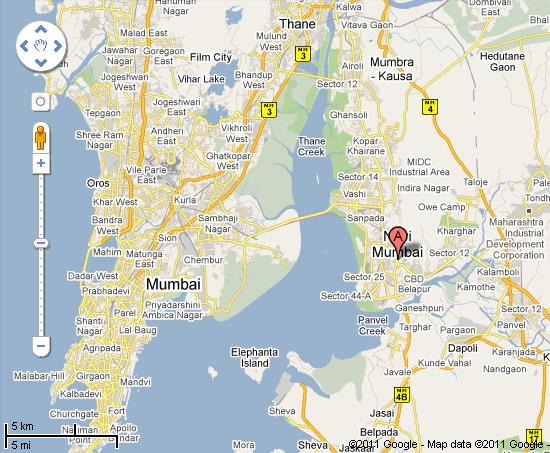
The drive to Navi Mumbai seemed to take forever, so much so that we got sick by the end of it. The road, the crowd, the slums and the dust lost their charm after half an hour. The five-year old became restless and kept asking, “When will we reach? Will we reach today?”
Almost every vehicle you find on the road carries smudges or scratches, dents or other marks of having survived (and daily surviving) Mumbai. There is a certain recklessness in the way they manoeuvre the roads that leaves us amazed that (touch wood) so few accidents happen.
Thus began ten days of isolation from the lure of Internet – with only books, TV and people for company. Okay, I admit I did check emails once or twice (or… maybe about five times!) but then a writer on the look out for opportunities (who has already made a mistake once) cannot keep herself from emails that long. I convince myself it is not wise to be so totally in isolation.
Among the books I read were the Diary of a Wimpy Kid series and City of Djinns. (If you’re smirking at the first, I am sure you’re one of those who don’t adore KungFu Panda or The Lion King or Calvin and Hobbes or Dennis the Menace, so there’s nothing more to be said.) I finally managed to complete The Catcher in the Rye. The TV happened to be taken over by the kids so most of my watching was dedicated to cartoon channels.
Sector-17 is a commercial area which, I am told, is the first place people turn to, to find what they need – from chatt to toys to shoes to clothes to other essentials of daily life. One evening we went there to pick up a few items and do some window shopping.
On our way back in an auto, we had to cross several traffic signals. Our autowallah obviously had no regard for them, and was hopping red lights whenever possible. There was no sign of any policeman anywhere. The auto was flying, as if the driver forgot it was merely a three-wheeler on an Indian road. He must have fancied himself as a Boeing pilot. We hugged the children closer, afraid they would shoot off and bang their heads on the bar when the fellow eventually hit the brakes. The way he was going I almost expected the vehicle to topple over. The autowallah had to reach the destination. Somehow.
At one of those junctions, to our surprise he chose to stop for the signal. When it turned green, the auto dashed forward only to be brought to a screeching halt because a car from one side had jumped red light and was right on our path. Our hearts were in our mouths. When we recovered from that shock (the autowallah was unconcerned and continued his victory lap of red-light-hopping), I finally told him, “Please go slow. We’re in no hurry to get home.”
For all their shortcomings, I appreciate the Mumbai autowallahs for one thing. Real Mumbaikars may have a different opinion on this, but during those ten days, (I must have travelled in autos seven or eight times) every time the autowallahs took care to return exact change, be it one rupee or two or ten.
Part 2 – Ten Days in Navi Mumbai: Lonavala

Leave A Comment